
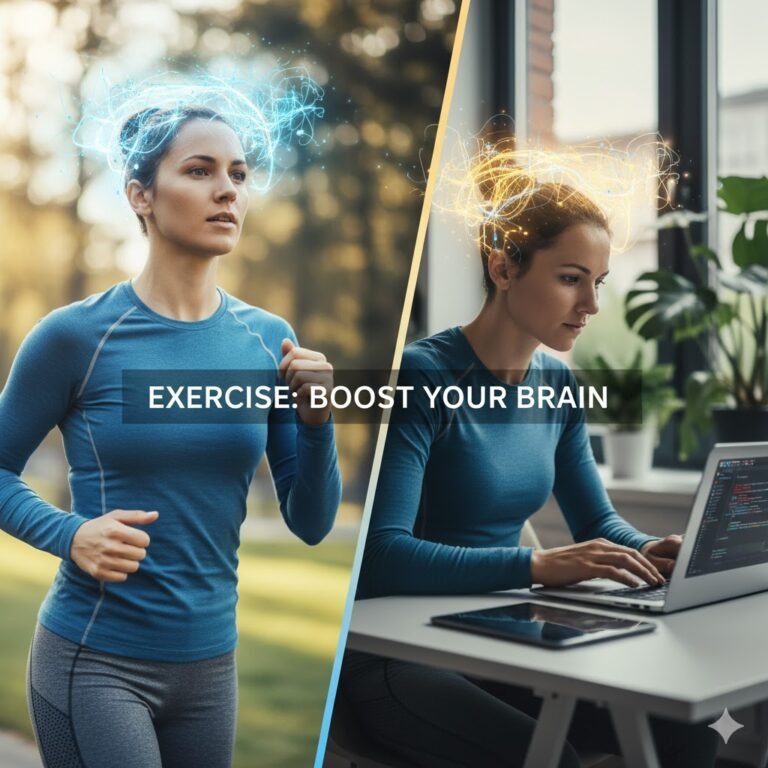
We often hit the gym or lace up our running shoes with clear goals: a stronger physique, better heart health, or losing weight. But what if we told you that the most significant muscle you’re training might be the one between your ears?
The connection between physical fitness and cognitive health is one of the most exciting areas in modern neuroscience. Far from being two separate systems, your body and mind are intrinsically linked. If you’re looking for a natural, powerful way to improve critical thinking skills, sharpen your memory, and unlock new levels of mental performance, the answer isn’t a new supplement or an intensive course—it’s getting active.
For anyone who seeks a healthy mind in tandem with a healthy body, understanding this relationship is key to achieving true, holistic wellness. This deep dive from The Health Clubs will explore the science and provide practical steps to leverage your workouts for superior brain power.
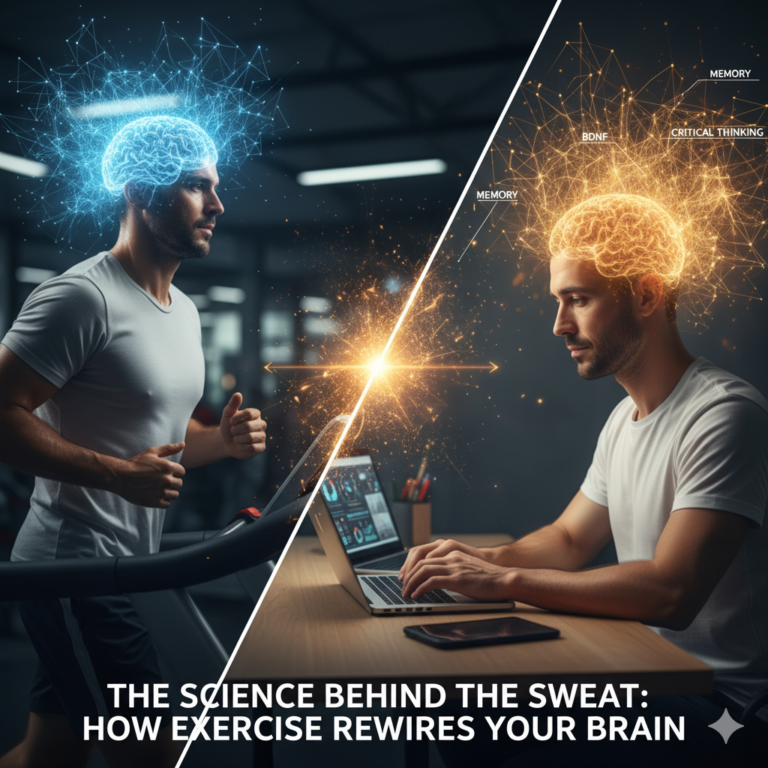
The Science Behind the Sweat: How Exercise Rewires Your Brain
When you exert yourself physically, your brain undergoes a remarkable series of changes. It’s not just a feel-good rush; it’s a biochemical overhaul.
- Blood Flow and Oxygenation: The most immediate effect of exercise is increased blood flow. Your brain is a metabolic powerhouse, consuming about 20% of your body’s oxygen supply. An intense workout delivers more oxygen and essential nutrients to the brain, optimizing its performance. This heightened circulation ensures your neurons are well-fed and ready to fire, which directly helps to improve critical thinking skills by enhancing information processing speed.
- BDNF: The Brain’s Miracle-Gro: Perhaps the most crucial component is the release of Brain-Derived Neurotrophic Factor (BDNF). Neuroscientists call BDNF “Miracle-Gro” for the brain. It’s a protein that promotes the growth of new neurons (a process called neurogenesis) and strengthens the connections between existing ones (synaptic plasticity). This directly impacts the hippocampus, the brain region vital for long-term memory formation and spatial navigation. By stimulating BDNF, you actively fortify your brain’s architecture to improve critical thinking skills and recall.
- Neurotransmitter Balance: Exercise is a natural mood regulator. It modulates neurotransmitters like dopamine, serotonin, and norepinephrine. Dopamine, in particular, is essential for focus, motivation, and executive functions—all necessary elements when you are trying to improve critical thinking skills and sustain high-level mental effort.
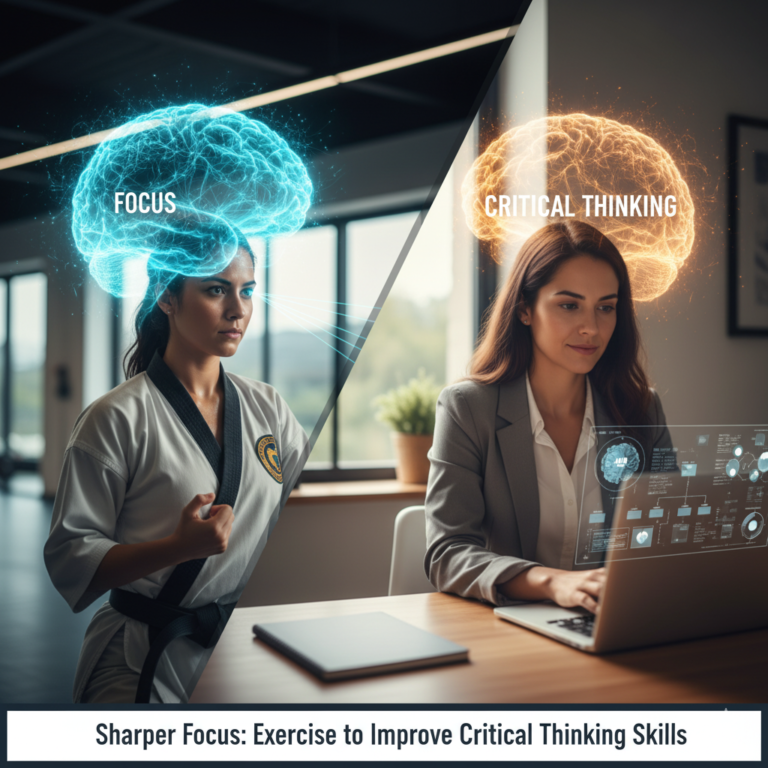
Sharper Focus: Exercise to Improve Critical Thinking Skills
Critical thinking is the ability to analyze information objectively and make reasoned judgments. It involves problem-solving, planning, and maintaining attention under distraction—functions primarily governed by the prefrontal cortex.
Studies have consistently shown that aerobic exercise is a powerful intervention for enhancing these executive functions. When you engage in activities like running, swimming, or brisk walking, you are effectively strengthening the prefrontal cortex, which governs:
- Working Memory: The ability to hold and manipulate information for short periods (like solving a complex math problem or following multi-step instructions).
- Cognitive Flexibility: The ability to switch between different tasks or mental sets, crucial for solving ambiguous problems and the core of how we improve critical thinking skills.
- Inhibition: The ability to ignore distractions and resist impulsive behaviors, allowing for focused thought and better decision-making.
By consistently exercising, you create a baseline of neurological resilience that makes it easier to consistently improve critical thinking skills both at work and in personal life.

Boosting Memory and Learning Ability
If you’re a student, a lifelong learner, or simply someone who wants to remember where they parked their car, exercise is your ally. The positive effect of BDNF on the hippocampus—the memory center—means that physical activity literally makes your brain a better filing cabinet.
Furthermore, physical activity primes the brain for learning. Exercising before or shortly after a learning ability session can significantly enhance the consolidation of new information. It creates a state of optimal arousal, making the brain more receptive to absorbing and retaining facts, figures, and concepts. This enhancement of learning ability is one of the most practical reasons to combine a commitment to improve critical thinking skills with a commitment to fitness. A truly healthy mind is one that is continually learning and adapting.
Cultivating a Healthy Mind and Fitness Mentality
The benefits of exercise extend beyond simple chemistry; they influence your psychological state and fitness mentality. Regular physical activity is a potent antidote to stress, anxiety, and depression—conditions that are notorious for clouding judgment and inhibiting the ability to improve critical thinking skills.
The act of setting fitness goals, pushing past perceived limitations, and sticking to a routine builds self-efficacy. This confidence translates directly into cognitive tasks. A robust fitness mentality teaches discipline and perseverance, which are the same traits required to tackle complex analytical problems. When you adopt a healthy mind approach, where physical and mental health are intertwined, you unlock a synergistic effect: the body supports the mind, and the mind motivates the body.
Practical Steps: Integrating Fitness into Your Cognitive Routine
You don’t need to train for a marathon to reap the brain-boosting rewards. Consistency and type of exercise matter most.
- Prioritize Aerobic Exercise: Activities that elevate your heart rate—such as brisk walking, running, cycling, or dancing—have the strongest links to cognitive benefits and the ability to improve critical thinking skills. Aim for 30 minutes, five days a week.
- Integrate Coordination Work: Activities that require complex motor skills, like yoga, martial arts, or team sports, force your brain to coordinate movement, balance, and spatial awareness, offering an additional cognitive challenge. This complex movement training is a phenomenal way to improve critical thinking skills.
- The Brain Break: Instead of reaching for coffee during a mental slump, try a 10-minute movement break. A quick set of jumping jacks or a fast walk around the block can instantly recharge your healthy mind.
- Use the Time Wisely: Combine your physical activity with mental stimulation. Listen to educational podcasts or audiobooks while on a walk to maximize your learning ability during your workout.
Conclusion
Frequently Asked Questions
Your path to better focus, a sharper memory, and a greater learning ability is right outside your door or inside your gym. By committing to regular physical activity, you are not just investing in a better physique; you are actively investing in your most valuable asset: your brain.
Embrace the fitness mentality that views exercise as essential fuel for your cognitive engine. It’s the single most powerful, all-natural tool you have to consistently improve critical thinking skills and maintain a healthy mind for life. Start today—your future self, equipped with superior focus and memory, will thank you.
Ready to achieve holistic wellness? Explore The Health Clubs’ classes and programs designed to help you strengthen both your body and your mind.
1. What type of exercise is best to improve critical thinking skills?
The strongest evidence points to aerobic exercise (cardio) that gets your heart rate up, such as brisk walking, running, swimming, or cycling. However, activities that require complex coordination (like dancing or martial arts) also challenge the brain, providing a dual benefit.
2. How quickly can I notice improvements in my memory and focus after starting an exercise routine?
Some studies show acute cognitive benefits, such as better focus and memory recall, immediately following a single moderate workout. However, noticeable, sustained improvements to improve critical thinking skills and overall mood typically appear after 4 to 6 weeks of consistent exercise (3-5 times per week).
3. Do I need intense workouts, or will a light walk suffice to benefit my brain?
Both help, but moderate-to-vigorous intensity exercise provides the greatest cognitive rewards. A brisk walk is a great start, but activities that make you breathe heavily and mildly challenge you are most effective for releasing the beneficial brain protein BDNF, which helps improve critical thinking skills.