
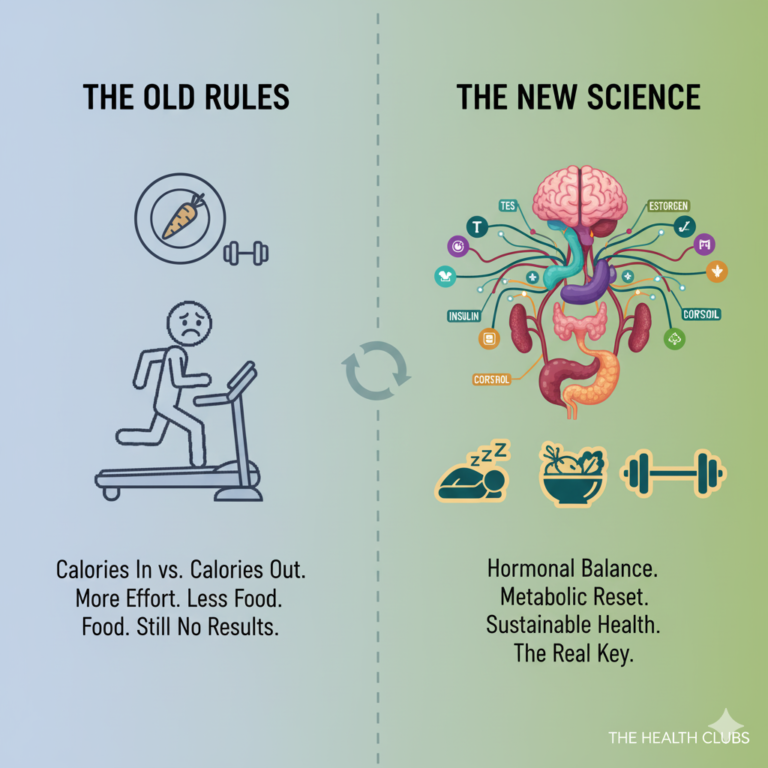
For decades, the standard advice for weight loss has been a simple, if frustrating, mandate: eat less, move more. But for countless men and women, this equation often fails to deliver lasting results. If you’ve been meticulously tracking calories and exercising only to hit a frustrating plateau or experience stubborn weight gain, it’s time to shift your focus from simple arithmetic to complex chemistry. The true battle for a healthy body weight is often waged not in the kitchen or the gym, but within your body’s sophisticated chemical command center: your endocrine system.
At The Health Clubs, we recognize that effective Weight Management requires a deep understanding of hormonal health. Ignoring these powerful chemical messengers is the single greatest obstacle to achieving a successful and lasting metabolic reset.
The Endocrine System: Your Body’s Master Regulator
Hormones are the chemical messengers that coordinate nearly every function in your body. They dictate when you feel hungry, how your body stores fat, how quickly you burn calories, and even where those calories are deposited. When these Hormones are thrown out of balance—a common reality in our high-stress, sleep-deprived, modern world—your body is programmed to defend its fat stores fiercely.
Restoring hormonal health is therefore the non-negotiable first step in any successful strategy for Weight Management. Let’s look at the key players that dictate your body’s tendency to gain or lose weight.
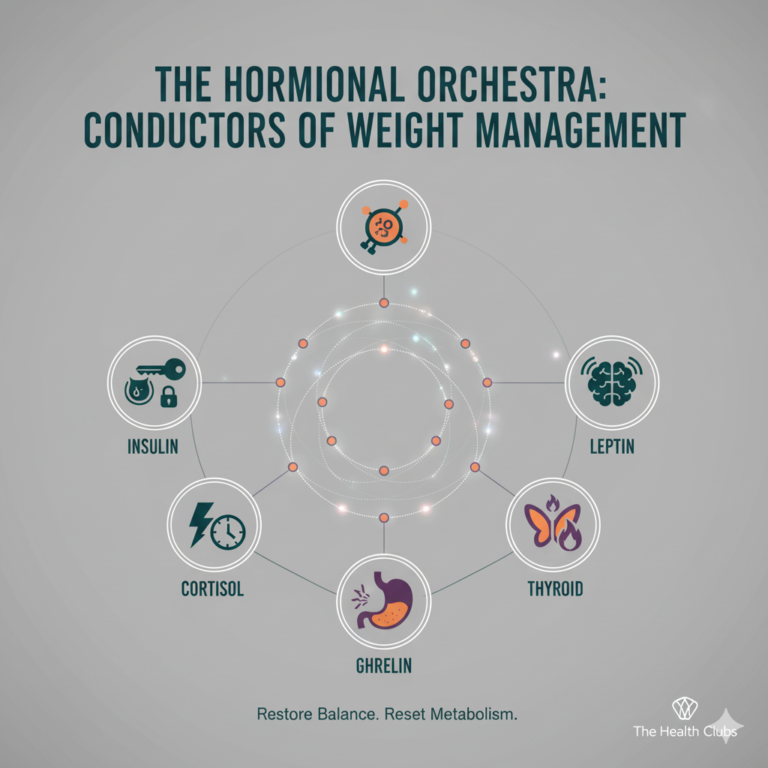
The Major Hormones Governing Weight Management
1. Insulin: The Fat-Storage Specialist
Insulin, released by the pancreas, is essential for regulating blood sugar. However, chronic exposure to a diet high in processed foods and refined sugars forces the pancreas to constantly pump out insulin. Over time, cells become resistant, leading to a state of high circulating insulin. Since insulin’s other major job is to promote fat storage, this elevated level acts as a perpetual storage signal, effectively making it chemically difficult to burn existing body fat. Achieving a metabolic reset begins with improving insulin sensitivity.
2. Cortisol: The Stress Saboteur
Produced by the adrenal glands, cortisol is the “stress hormone.” While helpful in genuine emergencies, chronic life stress—poor sleep, overtraining, demanding jobs—keeps cortisol levels elevated. This elevation is disastrous for Weight Management: it increases appetite, promotes cravings for sugary, high-calorie foods, and, most notably, directs fat storage to the dangerous abdominal area. Truly effective Balancing Hormones requires effective, consistent stress mitigation.
3. Leptin and Ghrelin: The Hunger Controllers
These two Hormones govern appetite. Ghrelin signals hunger; Leptin signals fullness. The challenge is often Leptin Resistance, where excess fat cells produce high levels of Leptin, but the brain simply stops receiving the “I’m full” signal. The result? Persistent, frustrating hunger and difficulty with Weight Management. Restoring the balance and sensitivity of these appetite Hormones is a cornerstone of sustainable weight loss.
Gender-Specific Challenges to Balancing Hormones
While the core regulatory Hormones affect everyone, sex Hormones introduce specific gender-related challenges to Weight Management.
For Women: The Estrogen and Progesterone Rollercoaster
Women experience profound hormonal shifts that directly impact Weight Management. During perimenopause and menopause, the drop in estrogen shifts fat storage away from the hips and thighs toward the abdomen, often despite consistent diet and exercise. Conditions like Polycystic Ovary Syndrome (PCOS) involve insulin resistance and high androgens, making successful Weight Management extremely challenging. For women, Balancing Hormones through life’s transitions is critical for maintaining a healthy metabolic reset.
For Men: The Testosterone Drop
Testosterone is key to maintaining muscle mass, energy, and a lower body fat percentage in men. As testosterone declines with age, or due to chronic lifestyle factors, men typically experience a reduction in muscle tissue (which lowers the metabolic rate) and a significant increase in abdominal fat. This visceral fat can, in turn, convert more testosterone into estrogen, creating a vicious cycle that completely undermines effective Weight Management and long-term hormonal health.
Your Action Plan for Balancing Hormones and a Metabolic Reset
Achieving a breakthrough in Weight Management requires treating your body’s delicate chemical balance with respect. This holistic approach supports your hormonal health and paves the way for a lasting metabolic reset.
- Prioritize Sleep for Hormone Synthesis: Aim for 7-9 hours of deep, consistent sleep. Sleep is when your body repairs itself, balances cortisol, and resets Leptin and Ghrelin levels. Compromising sleep is the quickest way to disrupt the Balancing Hormones effort.
- Strategic Nutrition for Insulin Control: Focus on whole foods, lean protein, and ample healthy fats. These foods stabilize blood sugar, improving insulin sensitivity—a crucial step for Weight Management—and supporting overall hormonal health. Limit highly processed carbohydrates and sugary drinks.
- Stress Mastery: Since cortisol is so detrimental to the metabolic reset, incorporate daily practices like meditation, walking, or deep breathing to mitigate chronic stress. Managing your mind is managing your Hormones.
- Lift Weights: Strength training is universally effective for Weight Management in both men and women. It builds metabolically active muscle tissue and significantly improves your cells’ sensitivity to insulin, providing a powerful metabolic reset.
By moving beyond the traditional calorie model and committing to supporting your Hormones, you can stop fighting your body and start working with it. Sustainable Weight Management is within reach when you make hormonal health your priority.
Frequently Asked Questions
1. Why am I gaining weight despite eating healthy and exercising?
The most common reason is an underlying hormonal imbalance, not a lack of effort. Hormones like high cortisol (stress), insulin resistance, or imbalanced sex hormones (estrogen/testosterone) signal your body to store fat and resist weight loss, regardless of your calorie count. Addressing your hormonal health is key to achieving true Weight Management.
2. Is hormonal weight gain reversible, and how long does a metabolic reset take?
Yes, hormonal weight gain is absolutely reversible! It starts with lifestyle shifts focused on Balancing Hormones—prioritizing sleep, managing stress, and using strategic nutrition. A noticeable metabolic reset often begins within 4-12 weeks, but consistency is required for lasting results, as hormones take time to regulate.
3. Which specific lifestyle change has the biggest impact on balancing weight-related hormones?
While diet and exercise are important, prioritizing deep, consistent sleep is arguably the most powerful single factor. Poor sleep instantly raises cortisol (the stress hormone) and disrupts the crucial appetite hormones, leptin and ghrelin. Stabilizing your sleep schedule is the non-negotiable first step in supporting overall hormonal health for better Weight Management.