
In today’s world, our phones have become our constant companions. From waking us up in the morning to keeping us entertained at night, screens now fill every spare minute of our day. But the more connected we become, the more disconnected we often feel—from our sleep, our peace of mind, and even our ability to focus. That is why a digital detox has become more important than ever.
A digital detox doesn’t mean throwing your phone away or becoming anti-technology. It simply means creating a healthy balance. By improving healthy phone habits, we can reduce stress, sleep better, and even improve mental clarity. This 7-day plan will help you reduce screen time, reset your mind, and rebuild your relationship with technology in a positive, sustainable way.
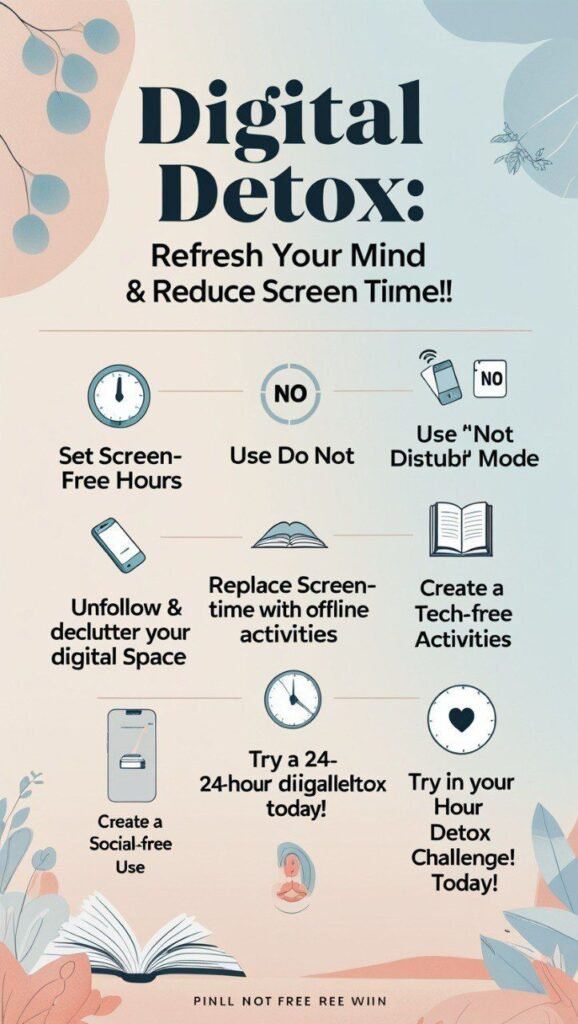
Why You Need a Digital Detox
Constant notifications, endless scrolling, and information overload can affect our health in more ways than we realize. Studies show that too much screen time is strongly linked to anxiety, poor sleep, low attention span, and emotional exhaustion. Many people today even experience technology and mental health issues such as digital stress, screen addiction, and something becoming more common: artificial intelligence anxiety—the fear of being replaced or overwhelmed by AI-driven technology.
A digital detox helps create space for your mind to breathe. It brings you back to your real-life experiences—conversations, mindfulness, creativity, and overall peace.
Your 7-Day Digital Detox Plan
Day 1: Track Your Screen Time
Start by checking your daily screen time. Most phones show this automatically. Seeing the numbers can be surprising—but this awareness is the first step toward change.
Ask yourself:
How much time is useful?
How much is just scrolling?
Set a daily limit based on what feels realistic, not extreme.
Day 2: Turn Off Non-Essential Notifications
Notifications are the biggest source of distraction.
Turn off alerts from social apps like:
Instagram
Facebook
Snapchat
Shopping apps
Keep only essential ones—calls, messages, work emails.
This simple step instantly reduces compulsive phone checking.
Day 3: No Phone for 1 Hour After Waking Up
How your morning begins shapes your entire day. Instead of grabbing your phone immediately, use the first hour for:
Stretching
Meditation
Drinking water
Planning your day
This builds a calmer mindset and stronger focus.
Day 4: Create “No Screen Zones
Choose at least one space in your home where screens are not allowed.
The best choices are:
Bedroom
Dining table
Bathroom
This helps break mindless scrolling and improves sleep quality naturally.
Day 5: Replace Screen Time with a Healthy Habit
Whenever you want to pick up your phone, replace the urge with something positive. Try:
Reading a book
Going for a walk
Journaling
Cooking
Listening to soft music
This trains your mind to choose healthier alternatives.
Day 6: Social Media-Free Evening
For one evening, completely avoid social media.
Use the time to reconnect with yourself or loved ones.
This gives your mind a break from comparison, pressure, and digital noise.
Day 7: Phone-Free Night Routine
To improve sleep quality, stay away from screens at least 1 hour before bed. Blue light from phones suppresses melatonin—the hormone responsible for sleep.
Instead, try:
A warm shower
Reading
Light stretching
Gratitude journaling
This routine leads to deeper, more refreshing sleep.

Final Thoughts
Technology is a tool—not a master. A digital detox simply helps you take back control. You don’t have to disconnect completely; you just need to set healthy boundaries. By building healthy phone habits, reducing unnecessary screen time, and understanding the link between technology and mental health, you protect your peace and improve your well-being.