
Unroll Your Mat and Start Your Journey
The world of yoga often appears intimidating—full of complex inversions, advanced Sanskrit terms, and highly flexible practitioners. But here is the secret: every master was once a beginner. If you’ve been considering yoga but feel unsure where to start, this guide is for you. We’ve broken down everything you need to know to make your first step into practice easy, accessible, and enjoyable.
This comprehensive guide to Yoga for Beginners will cover the foundational poses, explain how to approach breathing, and show you how to start building a practice that brings peace, strength, and balance into your daily life.
Why Yoga? More Than Just a Stretch
Before diving into the mechanics, it’s important to understand the profound benefits of committing to a practice. Yoga is not merely a physical exercise; it’s a holistic system designed to unite the body, mind, and spirit.
The Double Power: Yoga for Flexibility and Strength
One of the most immediate benefits you will notice is the transformation of your physical body. A consistent practice is a powerhouse for developing yoga for flexibility and strength. Unlike traditional weightlifting, yoga uses your body weight and sustained poses to build lean muscle tone and core stability. As you hold poses like Downward-Facing Dog, you are simultaneously strengthening your shoulders and lengthening your hamstrings. This balanced approach prevents injuries and improves posture dramatically.
Finding Your Calm: Yoga for Stress Relief
In today’s fast-paced world, Yoga for stress relief is perhaps its most vital contribution. The practice focuses heavily on pranayama (breathing techniques). By consciously linking breath to movement, you activate the parasympathetic nervous system, which is responsible for rest and digestion. This deliberate slowing down is a potent antidote to anxiety. Even 15 minutes of dedicated practice can lower cortisol levels, quiet the mind, and significantly reduce feelings of stress and overwhelm.
Getting Started: Essentials for Yoga for Beginners
You don’t need expensive gear or a dedicated studio to start practicing Yoga for Beginners.
1. The Right Mat
A non-slip yoga mat is crucial. It provides cushioning for your joints and necessary grip for your hands and feet. Look for one that is comfortable and relatively stable.
2. Comfortable Clothes
Wear clothing that allows a full range of motion. Tight jeans or restrictive tops will distract you. Think layers and stretchy fabrics.
3. Finding Your Space
All you need is enough room to fully extend your arms and legs without hitting anything. A quiet corner in your living room works perfectly. Consistency matters far more than location.
4. Breathing (Pranayama)
The breath is your anchor. In yoga, the goal is often to breathe in and out through your nose. Try to make your inhales and exhales equal in length. This simple focus is the heart of any Yoga for Beginners class.
Mastering Foundational Yoga Poses
As a new practitioner, focus on mastering the alignment of a few basic postures. Forget the advanced moves for now; the foundations are where true strength and awareness are built. Here are three essential Yoga Poses for new students:
- Mountain Pose (Tadasana): This looks simple, but it is the blueprint for all standing poses. Stand tall, feet hip-width apart, roll your shoulders back and down, and engage your thigh muscles. Feel the ground beneath your feet. This posture cultivates centeredness and proper alignment.
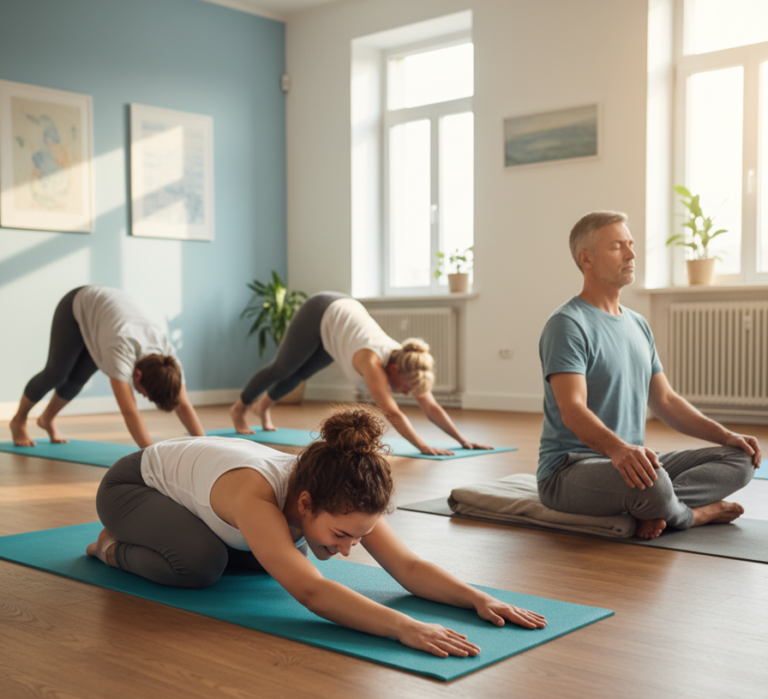
- Child’s Pose (Balasana): Your ultimate resting pose. Kneel on the floor, bring your big toes to touch, and widen your knees. Fold forward, resting your forehead on the mat, and extend your arms forward or rest them alongside your body. This pose is a gentle release for the back and a wonderful tool for cooling down or resting between challenging sequences.
- Downward-Facing Dog (Adho Mukha Svanasana): Arguably the most recognizable pose. Start on your hands and knees. Tuck your toes, lift your hips high and back, forming an inverted ‘V’ shape with your body. Spread your fingers wide, press firmly into your hands, and allow a slight bend in your knees if your hamstrings feel tight. This pose builds significant yoga for flexibility and strength in the entire body.
The Corner stone: Surya Namaskar (Sun Salutations)
If you have 15 minutes and want a complete body workout, turn to Surya Namaskar. A sequence of twelve dynamic Yoga Poses flowed together, the Sun Salutation is designed to warm the body, stretch the spine, and link breath to movement.
A typical sequence includes: Prayer Pose, Raised Arms Pose, Standing Forward Bend, Low Lunge, Plank, Knees-Chest-Chin, Cobra, Downward-Facing Dog, and then reverses the sequence.
Learning the Surya Namaskar sequence is often the first major step for those serious about Yoga for Beginners. Practicing even 5-10 rounds can provide cardio benefits, improve circulation, and serve as a complete warm-up for a longer practice focused on yoga for flexibility and strength.
The Philosophy of Practice: Art of Living Yoga
Many schools of yoga exist, but they all share the common goal of integrating practice into daily life. The principles taught in various disciplines, such as Art of living yoga, emphasize not just the poses (asanas) but also ethical discipline (yamas), self-observation (niyamas), and meditation (dhyana).
When approaching Yoga for Beginners, remember that the ultimate goal is not a perfect handstand but cultivating a mindful presence both on and off the mat. Using your breath to manage difficult poses is practice for using your breath to manage difficult life situations. This philosophical approach enhances the benefits of Yoga for stress relief and makes the practice sustainable for life.
Consistency and Safety Tips
Listen to Your Body
The most important rule for Yoga for Beginners is: No Pain, No Gain is a myth. Slight discomfort is normal as you stretch, but sharp, shooting, or intense pain is a warning sign. Back off immediately. Your body is the best teacher.
Don't Compare
The person on the mat next to you has a different body and a different history. Focus only on your own experience. Progress in Yoga for Beginners is measured by consistency and depth of breath, not by how deep you can get into a pose.
Find a Teacher
While this guide helps you start, finding a qualified instructor for Yoga for Beginners classes is invaluable. They can offer hands-on adjustments (with permission) and personalized guidance on proper alignment for your body, ensuring you build a safe and effective foundation.
Conclusion: Your Journey Starts Now
Taking the first step into Yoga for Beginners is a profound act of self-care. You are not just signing up for a physical exercise; you are committing to a practice that promises mental clarity, emotional resilience, and physical well-being. Embrace the process, honor your body, and breathe deeply. Whether you start with five minutes of Surya Namaskar or a single session focused on gentle Yoga Poses, you are creating space for positive change.
Start your journey today—the mat is waiting.
Frequently Asked Questions (FAQs)
Q1: How often should a beginner practice yoga to see results in flexibility and strength?
A: For tangible results in yoga for flexibility and strength, beginners should aim for 3 to 4 sessions per week, even if they are only 15 to 20 minutes long. Consistency is more important than duration. Practicing foundational moves like the Surya Namaskar sequence a few times a week is a great way to start building a sustainable habit.
Q2: Is yoga effective for dealing with stress and anxiety, and how quickly will I feel the benefit?
A: Yes, Yoga for stress relief is highly effective. You can often feel the calming benefits immediately, especially when focusing on breathwork (pranayama) in poses like Child’s Pose. Regular practice enhances this effect, teaching your body how to consciously shift out of a stress response over time, which aligns with the principles of Art of living yoga.
Q3: Do I need to be flexible to start yoga? What if I can barely touch my toes?
A: Absolutely not! The idea that you need to be flexible to start is the biggest myth about Yoga for Beginners. You start yoga precisely to gain flexibility. Focus on proper alignment in the basic Yoga Poses, such as Downward-Facing Dog, and only go as deep into the stretch as your body allows. Flexibility will naturally improve with time and consistent effort.