
Sleep is the cornerstone of good health, yet so many of us struggle to get restful nights. If you’ve found yourself tossing and turning, or waking up still tired, adding a few simple yoga practices could make a significant difference. In this article we’ll explore yoga for sleep, specifically how gentle movement, breathwork and mindful postures can translate into better sleep quality, share key benefits of yoga for sleep quality, and conclude with a practical yoga bedtime routine featuring recommended yoga poses for sleep
Why yoga for better sleep?
“Yoga for sleep” is more than a trendy catch-phrase—it’s backed by research and rooted in the physical and mental benefits of yoga practice.
- Studies show that people who practise yoga often report improvements in sleep quality (how well you sleep, not just how long).
- A meta-analysis found significant improvement in sleep quality among women using yoga interventions (PSQI scores improved) compared with non-active controls.
- The mechanism makes sense: yoga combines movement, stretching, and breathing in a way that engages the parasympathetic nervous system (the “rest and digest” branch) and reduces stress-related arousal.
- Moreover, research from the Johns Hopkins Medicine reveals even people who aren’t “flexible” or don’t have a high fitness level can benefit from yoga tailored for sleep.
In short: if you struggle with sleep, using yoga as a tool can help shift your system from “wired” to “winding-down”.
The benefits of yoga for sleep quality
Here are some specific benefits you gain from practicing yoga for better sleep:
- Reduced stress and anxiety
By engaging in mindful breathing and gentle postures, yoga lowers cortisol and calms the nervous system. This makes falling asleep easier and reduces night-time awakenings. (Healthline) - Improved sleep architecture / sleep quality
It’s not just about hours in bed—how you sleep matters. Studies show yoga leads to fewer awakenings, better sleep efficiency, and improved perceptions of restfulness. - Physical relief (tension, aches)
Gentle stretches and holding restorative poses relieve muscular tension, tight hips/back, which can interfere with falling or staying asleep. - Enhanced mind-body awareness
Yoga cultivates mindfulness which can reduce rumination (thinking too much) at bedtime—one major obstacle to sleep. - Non-pharmacological sleep aid
For many people, yoga offers a drug-free way to support sleep hygiene—which is particularly useful for those looking to reduce reliance on sleep medications or supplements.
Which styles and when?
Not all yoga is equally suited for improving sleep. The timing, style and intensity matter:
- Avoid very vigorous or high-intensity styles (like hot yoga or fast-flow vinyasa) too close to bedtime—they may raise heart rate and disrupt the winding-down process.
- Better options for pre-bedtime include gentle, restorative styles such as Hatha Yoga, Yin Yoga, and Yoga Nidra (a guided relaxation practice).
A regular, consistent routine yields stronger benefits than sporadic practice.
Yoga bedtime routine: yoga poses for sleep
Here is a simple routine you can follow (ideally 20-30 minutes before bed) to help ease into better sleep. Use a yoga mat or soft surface; props like pillows or bolsters may be helpful.
1. Begin with calming breathwork (2-3 minutes)
- Sit or lie comfortably.
- Inhale deeply through your nose, exhale slowly.
- Optional: use Ujjayi breath (ocean-sound back-of-throat breathing) to calm the mind.
2. Pose: Legs Up the Wall (Viparita Karani)
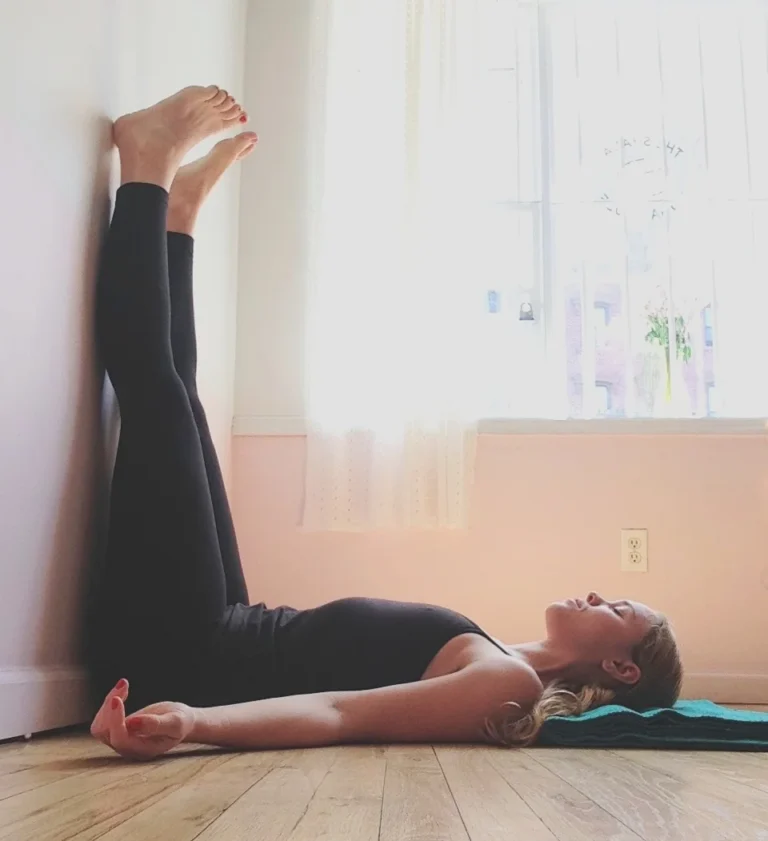
Lie on your back with legs extended up the wall, forming an “L” shape. Arms relaxed by your sides. Hold for 3-5 minutes, breathe gently.
Benefits: Relieves lower-body fatigue, reduces gravitational pull, promotes calm. Recommended by Johns Hopkins for sleep.
3. Pose: Reclined Butterfly (Supta Baddha Konasana)
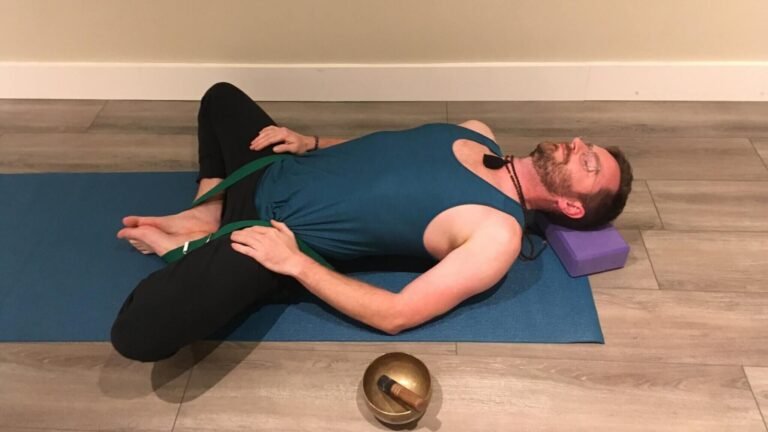
Lie on your back, soles of feet together, knees drop out to the sides. Arms can rest above head or by sides. Stay for 2-4 minutes.
Benefits: Opens hips gently, stimulates relaxation and deep breathing.
4. Pose: Standing Forward Bend (Uttanasana)
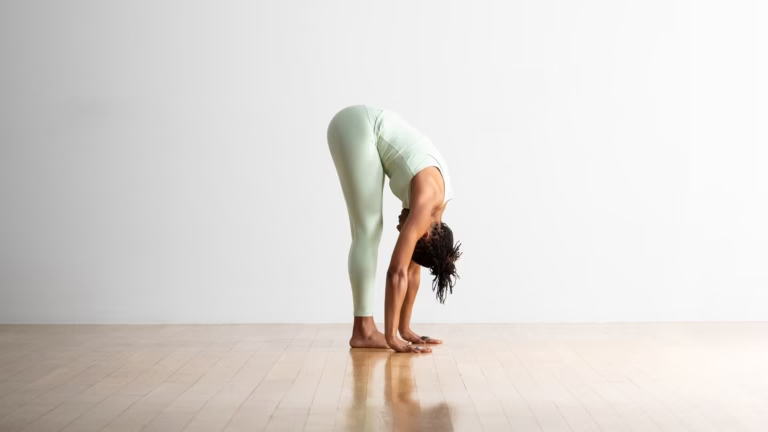
Stand feet hip-width. Hinge at hips, fold forward, let head and arms hang or rest on shins/floor. Stay 1-2 minutes.
Benefits: Calm the nervous system, release spinal tension and hamstrings, quiet the mind.
Final Pose: Corpse Pose (Savasana)
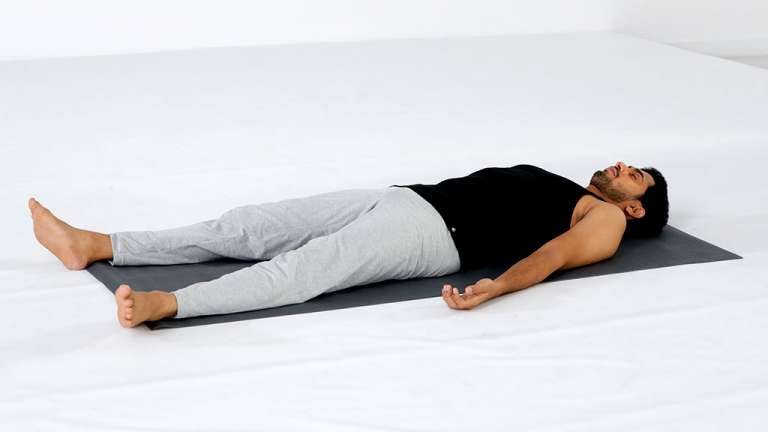
Lie flat on your back, legs straight, arms by sides, palms up. Close eyes, breathe easily. Stay 5-7 minutes.
Benefits: Allows deep full-body relaxation; integrates the practice and prepares body/mind for sleep.
6. Transition to bed
After the final pose, get up slowly, dim lights, avoid screens for a few minutes, and slip into bed in a calm, quiet state.
Practical tips & considerations
- Try to practise this routine consistently, not just once in a while. Habit matters.
- Keep the environment calm: dim lights, comfortable room temperature, avoid bright screens right before sleep.
- If you have a sleep disorder (chronic insomnia, sleep apnea, etc.), consult with a healthcare provider; yoga is supportive but not necessarily a sole replacement for medical treatment.
- Avoid heavy or highly strenuous yoga too close to bedtime—save that for morning or early evening.
- Adapt to your body: props (blanket, bolster, pillow under knees) help, especially if you have stiffness or discomfort.
Final thoughts
Good sleep doesn’t have to remain elusive. By incorporating yoga for sleep into your evening—in the form of a gentle, mindful routine—you’re giving your nervous system the cue that it’s time to rest and recover. The benefits of yoga for sleep quality are real and backed by research: less wakefulness, calmer mind, greater ease in falling asleep. At the same time, the best results come with consistency, a supportive environment, and choosing the right kind of yoga at the right time.
If you’re ready to try something new tonight, roll out your mat, slow your breath, and allow your body to wind down gently. Sleep well, and feel the difference tomorrow.
Frequently Asked Questions
1. Can yoga really help me sleep better?
Yes! Research shows that consistent yoga practice helps calm the nervous system, reduce stress hormones, and improve sleep quality. Gentle evening yoga can make it easier to fall asleep and stay asleep through the night.
2. What type of yoga is best for sleep?
Restorative yoga, Yin yoga, Hatha yoga, and Yoga Nidra are all excellent for improving sleep. These slower, mindful practices focus on relaxation and deep breathing rather than intense physical effort.
3. When should I do yoga for better sleep?
Ideally, do yoga about 30–60 minutes before bedtime. This helps your body and mind transition from the activity of the day into a restful, calm state.